About Us
Two decades of work in electric-field physics, built into instruments that engineers and physicians now depend on.
Who We Are
A capacitive field reads a pipeline and a tumor the same way. We spent years checking that this held up before we built four domains on it — industrial imaging, medical diagnostics, cancer therapy, human performance. Each one is engineered in-house, from first measurement to finished instrument.
A result that stays in the lab is not yet a result to us. Someone waiting on a diagnosis or a cure doesn't benefit from a paper — only from the device leaving the lab and holding up in the field.
Our physicists, engineers, and clinicians aren't siloed by domain. Someone tuning a pipeline sensor this month might be calibrating a therapy device next month — the physics underneath doesn't change, just what the engineering has to do with it.
Our History
It started with a collaboration at Ohio State University and one question: what a change in capacitance could reveal inside a sealed vessel. Twenty years on, that question has four working answers. The prototypes came first, the evidence came from testing them, and the patents came after — in that order, every time.
None of the diversification was accidental. Each decade posed a harder version of the same problem and forced a new instrument into existence before we could answer it. Growth here has looked less like a plan and more like research: slow for a long stretch, then sudden, but always pointed the same direction.
Read our full history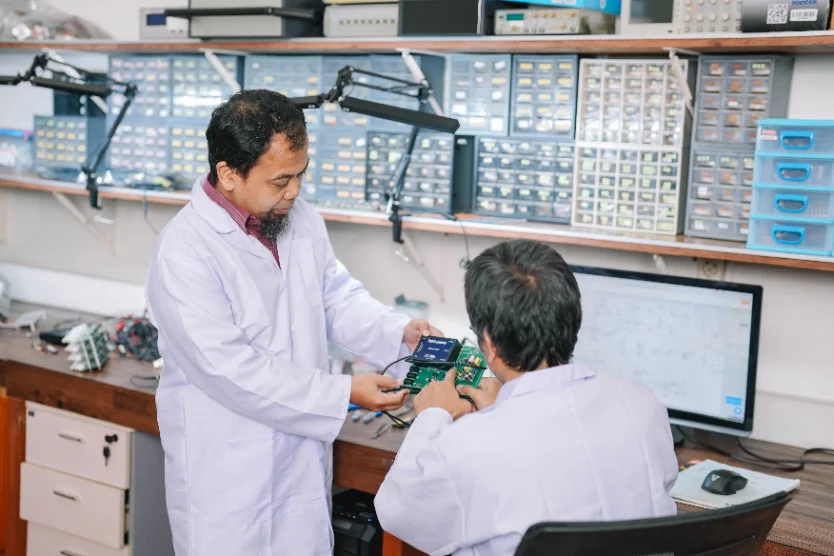
Our Mission
Curiosity has to earn its keep here — it isn't enough on its own. A question justifies years of study only when a careful enough answer to it turns into something someone can actually depend on.
Ctech Labs at a Glance
Every product we sell had to survive being a hypothesis first. That discipline scales across the industrial, medical, and performance markets we serve today.
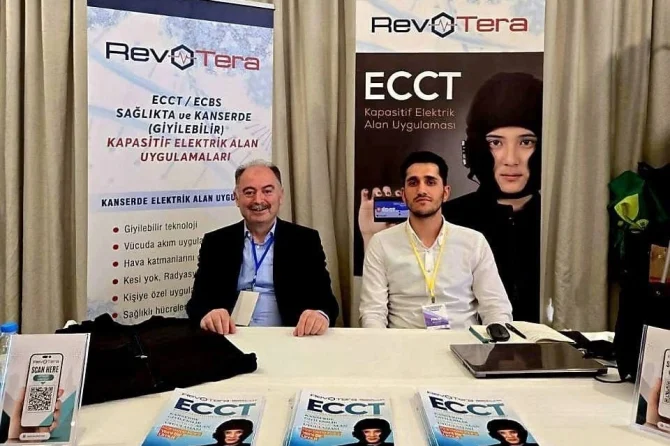
ECVT, ECCT, and ECBS look unrelated on a spec sheet, but they draw from the same well — an electric field, tuned differently for each job.
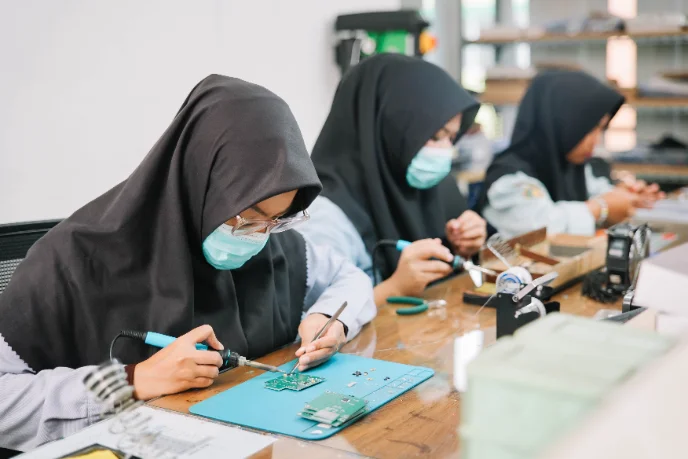
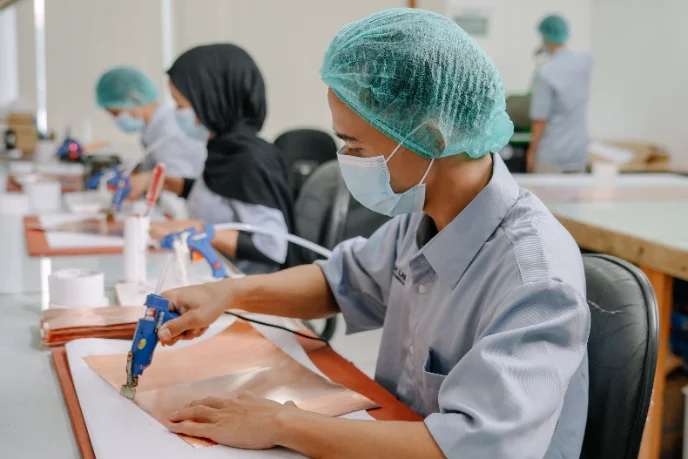
Nothing we design is finished until it's been built by hand, in the same facility in Tangerang that ran the first prototype two decades ago.
We are Ctech Labs
See all storiesEvery instrument we've shipped traces back to one afternoon of asking why a capacitor's reading shifted when something moved inside it. What follows is where that question has taken us since.